- +91 9274867875
- balajihorizoneyehospital@gmail.com
- Science City
- Naranpura

Microbial keratitis is an infection of the cornea — the clear front surface of the eye. It can be caused by bacteria, fungi, viruses or, less commonly, a parasite called Acanthamoeba. It is a potentially sight-threatening condition that needs prompt diagnosis and treatment. With early, appropriate care, most infections can be controlled and vision protected.
Important: A painful, red eye with blurred vision — especially in a contact-lens wearer or after an eye injury — should be assessed by an eye specialist urgently. Do not wait, and do not self-treat with old or steroid eye drops.
The cornea has no blood supply, so infections can advance quickly and may leave a scar that affects vision. Aggressive infections can threaten the eye itself. Early treatment greatly improves the chance of a good outcome, which is why timely specialist assessment is essential.
Diagnosis is made by careful slit-lamp examination of the cornea. In significant or atypical cases, a corneal scraping is taken for microbiology (smear and culture) to identify the organism and guide targeted treatment. Accurate identification matters because bacterial, fungal, viral and Acanthamoeba infections are treated very differently.
Treatment is tailored to the cause and severity:
It should not be left to chance. Some mild surface problems settle, but a true microbial keratitis needs prompt, targeted treatment to prevent scarring or progression.
Some infections heal with a scar that may affect vision, depending on size and location. Early treatment reduces this risk; established scars can sometimes be treated later with a corneal transplant.
Remove the lens, keep it (and the case) for possible testing, and seek an urgent eye assessment the same day. Do not put the lens back in.
This information is for general awareness and does not replace urgent consultation with an eye specialist. If you have a painful red eye with reduced vision, seek care without delay.
Related: Cornea & Corneal Transplant, Contact Lens Clinic, Emergency Eye Care.
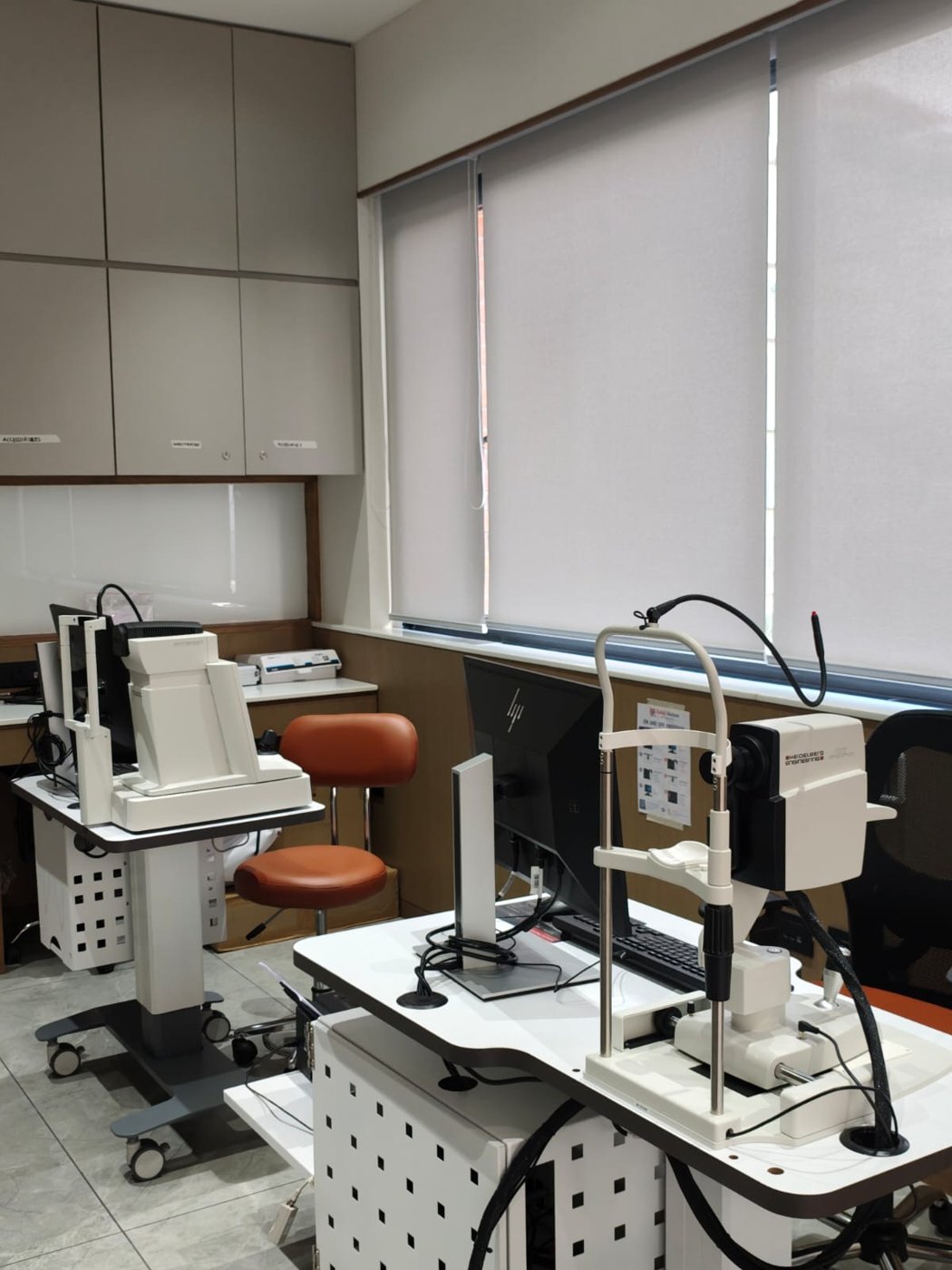
The cost of Microbial Keratitis Treatment depends on your eyes, the technology and any lens or implant chosen, and your individual clinical needs. We give you a clear, written estimate after your examination — with no obligation — and explain exactly what is included.
Request a cost estimate on WhatsApp Call +91 92748 67875
We don't list fixed prices because the right treatment — and therefore the cost — varies from patient to patient.
Fellowship-trained cornea, refractive & cataract surgeon.
First in Gujarat with ANTERION & SPECTRALIS (GMPE).
Evidence-based, individualised advice — no overtreatment.
Convenient care at Science City & Naranpura, Ahmedabad.

MBBS, MS (Ophthalmology), FCRS — Cornea, Refractive & Ocular Surface Surgeon
Founder & Director of Balaji Horizon Eye Hospital and Consultant Cornea & Refractive Surgeon at C.H. Nagri Eye Hospital, Ahmedabad. Dr. Patel focuses on accurate diagnosis, vision preservation and individualised, ethical care.
View full profile →Same specialist care at both our Ahmedabad branches.